Blog
What Is a Spell Bee? Benefits, How It Works, and Learning Opportunities
Introduction
Strong spelling and vocabulary skills are essential for academic success and effective communication. One of the most engaging ways to develop these skills is through a Spell Bee competition. Over the years, Spell Bee programs have become increasingly popular in schools because they encourage students to learn new words, improve pronunciation, and build confidence while making language learning enjoyable.
If you’re wondering What Is a Spell Bee?, this guide explains everything you need to know—from how Spell Bee competitions work to their educational benefits, preparation strategies, and how structured learning programs can support students in their language-learning journey.
What Is a Spell Bee?
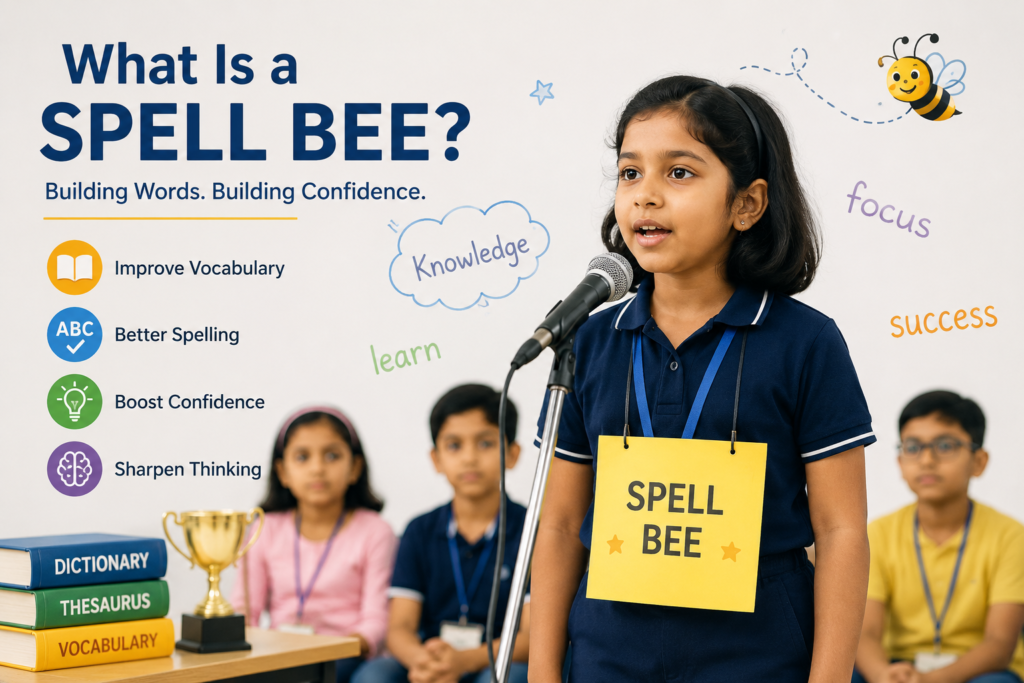
A Spell Bee is an educational activity or competition in which students spell words aloud after hearing them pronounced by a moderator. Participants may ask for the word’s meaning, origin, or an example sentence before spelling it correctly.
Unlike simple spelling tests, a Spell Bee focuses on developing a deeper understanding of language. Students learn word patterns, pronunciation, vocabulary, and spelling rules while improving their listening and analytical skills.
Today, Spell Bee competitions are organized in schools, educational institutions, and language-learning centres worldwide to help students strengthen their English language foundation.
Why Are Spell Bee Competitions Important?
A Spell Bee competition is not only about spelling difficult words. It encourages students to understand language more effectively while developing habits that contribute to long-term academic success.
Participating regularly helps children:
- Develop a stronger English vocabulary.
- Improve spelling accuracy.
- Enhance pronunciation.
- Build reading confidence.
- Improve writing skills.
- Strengthen listening ability.
- Increase concentration and memory.
- Gain confidence while speaking in front of others.
These language skills are useful throughout a student’s academic and professional life.
How Does a Spell Bee Competition Work?
Although every competition may have its own format, most Spell Bee events follow a similar process.
- A moderator pronounces a word.
- The participant listens carefully.
- The student may ask for:
- The meaning of the word
- Its origin
- An example sentence
- The participant spells the word aloud.
- Judges verify the spelling.
- Correct answers allow participants to move to the next round.
As the competition progresses, words become more advanced, requiring a better understanding of pronunciation, vocabulary, and spelling rules.
Benefits of Spell Bee
There are many benefits of Spell Bee that extend beyond classroom learning.
Improves Vocabulary
Students encounter new words regularly, helping them expand their vocabulary and communicate more effectively.
Builds Strong Spelling Skills
Instead of memorizing words, students learn spelling patterns, prefixes, suffixes, and root words that make spelling easier to understand.
Enhances Reading Ability
A broader vocabulary improves reading fluency and comprehension, making it easier for students to understand different types of texts.
Develops Better Pronunciation
Listening carefully to spoken words helps students improve pronunciation and recognize similar-sounding words.
Strengthens Memory and Focus
Remembering spellings, meanings, and pronunciation develops concentration and long-term memory.
Boosts Confidence
Participating in competitions helps students become comfortable speaking before teachers, classmates, and judges, improving their communication skills.
Spell Bee for Kids: Why It Matters
A Spell Bee for kids provides an engaging way to learn English while making vocabulary building enjoyable. Instead of treating spelling as rote memorization, children explore how words are formed and used in everyday communication.
For younger learners, Spell Bee activities can:
- Develop early literacy skills.
- Encourage curiosity about language.
- Improve listening habits.
- Build confidence in speaking English.
- Make learning interactive and enjoyable.
As children progress through different levels, they gradually develop stronger language and communication skills.
Skills Students Develop Through Spell Bee
Participating in Spell Bee activities helps students improve several important academic and personal skills, including:
- Vocabulary development
- Accurate spelling
- Pronunciation
- Reading comprehension
- Listening skills
- Writing ability
- Grammar awareness
- Critical thinking
- Analytical skills
- Public speaking confidence
These skills contribute to better academic performance and more effective communication.
How to Prepare for a Spell Bee
Understanding how to prepare for a Spell Bee can help students perform confidently while improving their overall language skills.
Some practical preparation tips include:
Read Every Day
Reading storybooks, newspapers, and age-appropriate articles introduces students to new vocabulary naturally.
Learn New Words Regularly
Building a daily vocabulary habit helps students remember words more effectively over time.
Understand Word Meanings
Learning definitions, pronunciation, and usage makes it easier to remember spellings.
Practice Phonics
Understanding letter sounds helps students recognize spelling patterns rather than memorizing individual words.
Study Word Families
Learning prefixes, suffixes, and root words enables students to decode unfamiliar words.
Take Practice Tests
Mock Spell Bee competitions help students become comfortable with competition formats and improve confidence.
Revise Frequently
Regular revision strengthens memory and improves recall during competitions.
Common Topics Covered in Spell Bee Learning
Most Spell Bee learning programs introduce students to important language concepts such as:
- Sight words
- High-frequency vocabulary
- Phonics
- Word families
- Prefixes
- Suffixes
- Root words
- Synonyms
- Antonyms
- Homophones
- Silent letters
- Context-based vocabulary
- Pronunciation practice
These topics help students understand the English language systematically instead of relying only on memorization.
Why Choose the ADA Spell Bee Program?
The ADA Spell Bee Program is a structured English language course designed to strengthen students’ spelling, vocabulary, pronunciation, and communication skills through interactive learning. Unlike traditional English tuition, the program focuses on practical language development, helping children build confidence while preparing for school assessments and Spell Bee competitions. With age-appropriate lessons, small batch sizes, and regular practice, students develop a strong foundation in English that supports their academic growth.
Program Highlights
- Structured learning for students in Grade 1–9 (Ages 6–16)
- Available in Online and Offline interactive classroom formats
- Focus on spelling, vocabulary, pronunciation, and listening skills
- Phonics-based learning and word formation techniques
- Weekly spelling drills and mock competition rounds
- Regular assessments with performance tracking
- Small batch sizes for personalized attention
- Beginner, Intermediate, and Advanced learning levels
- Certification upon successful course completion
The program also addresses common challenges faced by students, such as weak vocabulary, frequent spelling mistakes, low confidence, hesitation while speaking English, and lack of focus. Through guided instruction and consistent practice, ADA Spell Bee helps children become confident learners with stronger English language skills for both academics and future success.
Conclusion
Understanding What Is a Spell Bee? helps parents, teachers, and students appreciate its role in language development. A Spell Bee is much more than an English spelling competition—it is a valuable educational activity that strengthens vocabulary, spelling, pronunciation, reading, writing, and communication skills.
Whether children participate for academic improvement or competitive learning, consistent practice and guided instruction can make a significant difference. With regular reading, vocabulary building, and structured learning opportunities, students can develop confidence and a lifelong love for the English language.
1. What is the right age to join a Spell Bee?
Most Spell Bee programs are suitable for children from Kindergarten or Grade 1 onwards. Competitions are usually divided into age or grade levels, allowing students to learn and compete according to their abilities.
2. Is a Spell Bee only for students who are good at English?
No. A Spell Bee is designed for learners of all skill levels. With regular practice and guidance, beginners can improve their vocabulary, spelling, and confidence over time.
3. How can my child prepare for a Spell Bee competition?
Children can prepare by reading daily, learning new words, practicing spelling, understanding word meanings, studying phonics, and taking mock Spell Bee tests regularly.
4. Do Spell Bee classes help improve English skills?
Yes. Well-structured Spell Bee classes help students strengthen spelling, vocabulary, pronunciation, reading, and communication skills through guided lessons and regular practice.